Dalian
The Yellow Sea (Korea's West Sea) is between China's east coast and
Korea's west coast. I spent the first eleven years of my life
at the western tip of the Korean peninsula (Hwanghae Province). Before
August of 1945, I used to see Japanese ships navigating from and to the
Chinese port called Dalian. This place was called Dairen, Daeryeon,
Port Arthur by Japanese, Koreans, Russians and Englishmen, respectively.
I was fortunate enough to sped two night in this city during my trip
to China in April of 2013.
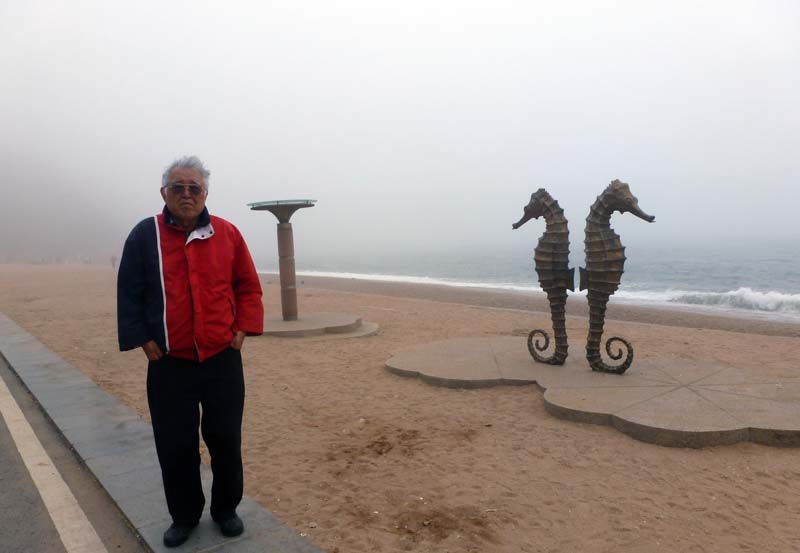
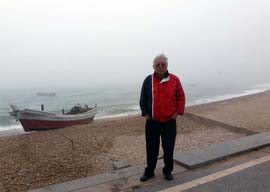
In this photo, I am standing on
a seaside of Dalian, with the Yellow Sea in the background. On
the opposite side of this sea, there is a coastal village where
I used to swim during my childhood years.
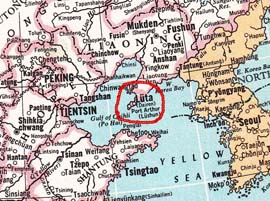
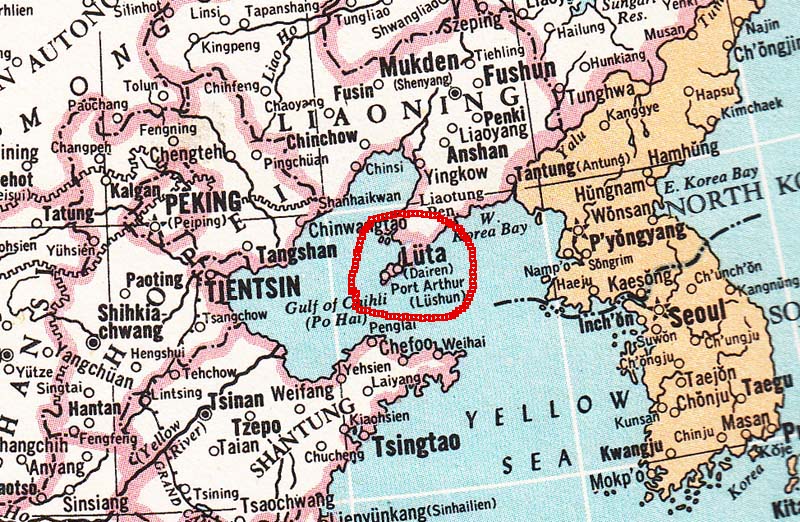
- Look at this map.
Dalian is located at the tip of the peninsula sticking out from Manchu.
Since the time of Toyotomi Hideyosi (1585-1598), Japanese leaders have
been interested in advancing toward the Asian mainland (Daichi - big land).
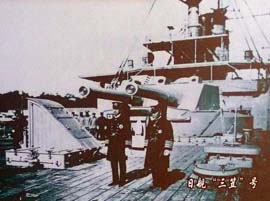
Japanese battle ship in Dalian.
- After building their Western style armament industry, Japanese developed
their territorial ambitions toward the Korean peninsula and northern
China. In order to solidify their influence in Korea, Japanese fought
the Sino-Japanese War in 1895 and the Russo-Japanese War in 1894-95. They
won both wars and annexed the Korean territory to Japan in 1910.
Japan's ultimate aim was of course to conquer the mainland of China,
and the shortest way to reach the capital city of Beijing was through
the sea port of Tienjin. Before reaching Tienjin, they had to go
through the opening of the Tienjin Bay (also called Balhae Bay)
Dalian is at the entrance to this bay.
- Japanese military headquarters in
Lushun (near Dalian). This place is called Ryojin in Japan and
Yeosoon in Korea. During Russo-Japanese War (1905), there was
a bitter fight resulting in heavy casualties on both sides.
- Logistic base for the Japanese army.
- Japanese battle ship
with heavy guns.
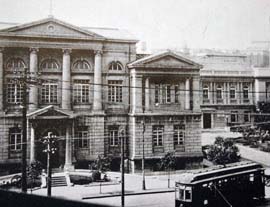
The headquarters of Southern
Manchurian Railway Company.
- Dalian is also the unique sea port of Manchuria. Starting from
Dalian, Japanese were interested in building a railroad system leading
to Shenyang (called Hoten by Japanese), Jangchun (called Shinkei by
Japanese), and to Harbin. In this way, Japanese wanted to exploit natural
resource of Manchuria. Many Japanese and Korean engineers worked for
this railroad company.
- China has been invaded many times by many different people, but
Chinese have been able to absorb them to make their own.
For instance, Manchurians invaded China during the 17th Century
and set up the Qing Dynasty, but those Manchurians these days
claim to be "Han Chinese" (pure Chinese).
Since 1850, Westerners and Japanese came to China, and built many
modern structures. They left, but Chinese are using those buildings
and bridges very effectively for their own purposes.
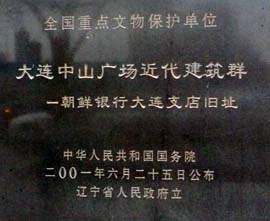
- The Bank of Korea's Dalian Branch
was built in 1930. This building was neatly
refurbished and is being use for the ICBC (Industrial and
Commercial Bank of China). Before 1945, the Bank of
Korea was a Japanese bank. Chinese do not seem to hide
their past humiliation. This is a
brass plate telling the history of this
building.
-
How does this building look?
- Brass plate telling the history of this
- This latest photo tells
this building is now for ICBC.
- Evening view of this building.
On the left side is a building used by Japanese as their police station.
This building is now used for the Citi Bank of China.
- The Bank of Korea in Seoul was also
built by Japanese.
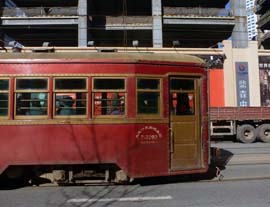
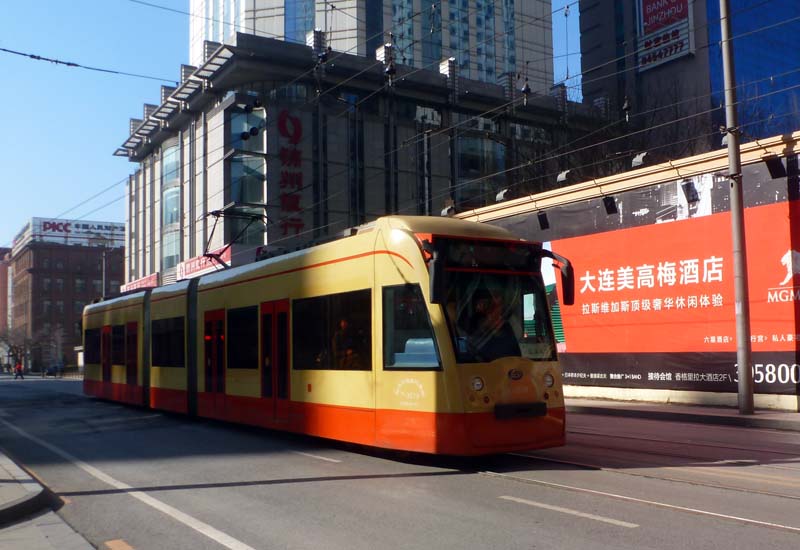
- Trolley cars can be seen in
Dalian, and there are different models. I was very happy to
see this particular model because I used to ride on "electric
cars" like this before leaving in Korea in 1954. This Mitsubishi
model was introduced by Japanese to Seoul before 1940, and its
unique feature is that it has six doors. Here is
a full view of this trolley car.
This trolley car must be more than 73 years old, Chinese are
still using it. This tells the extent to which Chinese converting
foreign products to their own. Koreans got rid of those
electric cars in 1965.
Don't worry. There are also
newest models.
- Asia Development Company was a
Japanese institution to buy up the farmlands in Japanese colonies.
This building seems to be in good shape. This building is now
used for the Chinese Bank of Communication.
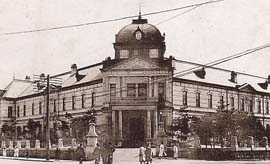
In Seoul, Korea, Japanese had a company with the same name with
the same purpose. This is a
photo of the company building in
Seoul. When I left Korea in 1954, this building was used for
the ministry of internal affairs (police and security). I assume
it is gone now.
Koreans hated this "development" company and refused to sell
their lands to Japanese.
As a consequence, Japanese had to could buy only low-quality lands
and develop them. It was OK for Koreans. I assume Chinese had
the same attitude to this company.
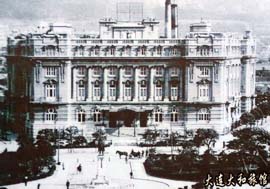
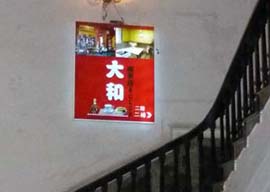
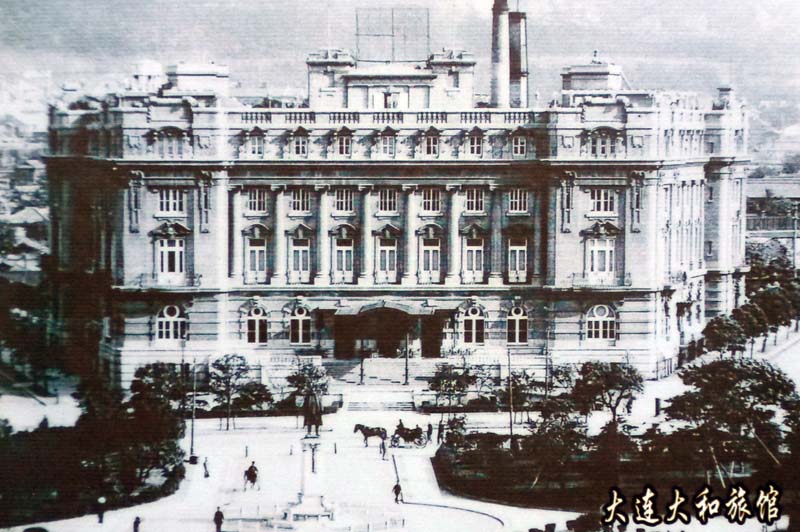
- Yamato Hotel used to be the superstar
hotel before 1945. The Japanese prime minister stayed here when he came
to Dalian. The Emperor of Manchu-Koku also stayed here. It is now
a three-star hotel called "Dalian Hotel." This building looks like
this these days.
- Yamato Club room still carries the original
Japanese name. Needless to say, they keep this Japanese name to attract
tourists from Japan.
- From this club room, the view of
Dalian's main square used to look like this. When I went there
(April 2013), the view was
like this. This main square is now called
the Zhongsan Square. Zhongsan was one of the names of Sun Yatzen.
- The Bank of Korea and the Police Station
look like this from the Yamato Club.
-
Click here for the Wikipedia page for the Zhongsan Square.
- Dalian has been and still is a seaport city.
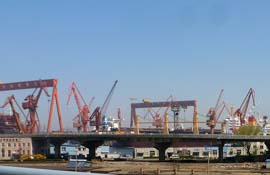
- Old and new buildings. Those four-story
seaport terminals were build by Japanese 100 years ago, and they
were the tallest buildings in Dalian then. These days, new building
are sky-high. There are many many high-rise buildings in China and they
are all built after the year 2000.
- Another dock entertaining newly
arrived ships.
- Ferry boat to and from Inchon, Korea.
- One of the cargo terminals. The
people of the world use many things made in China. They come from
China in this way.
- Dilian is also a very livable city. Let us look at some photos.
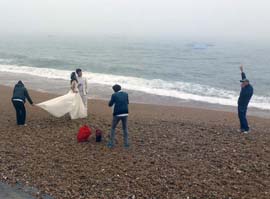
- It has beautiful beaches.
I am standing at this beach with the Yellow Sea behind.
On the other side of this sea, there is a another beach
in Korea where I used to swim during my childhood.
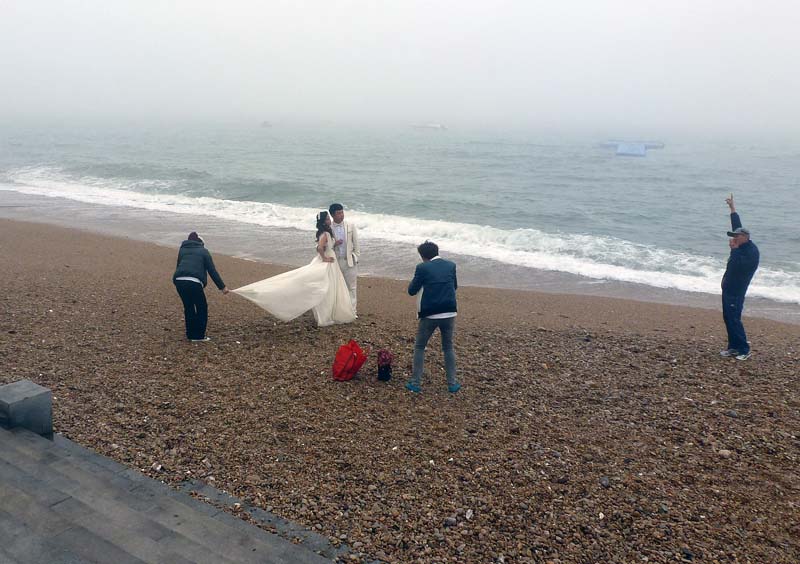
- Excellent place to have
memorable photos for newly-wed couples.
- Mao Zedong came
to this beach in 1962, and composed
a poem praising the beauty of the place.
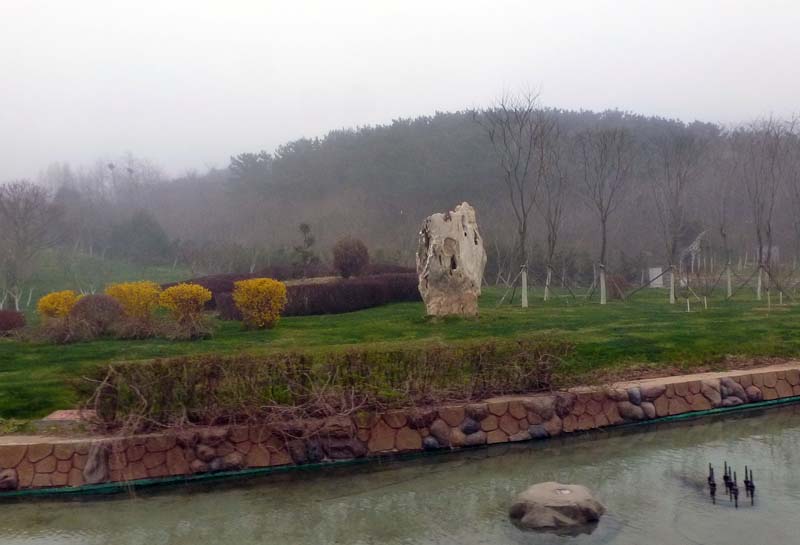
- On the beach is a hill-side
park with natural beauty, and also with artistic
sculptures
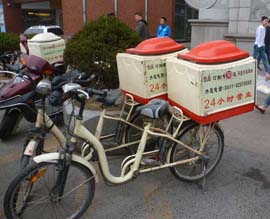
- Dalians know how to eat.
These are food-delivery bicycles. They are convenient
for office worked in the city.
- MacDonald's is ready
if you need fast food.
- One of the Japanese restaurants,
in addition to numerous Chinese seafood restaurants.
- Here is another Japanese restaurant,
which looks rather expensive. There are many tourists
coming from Japan, especially those whose parents and grand
parents lived here before 1945.
Toshiro Mifune was born here in 1920. Who was he? He was
the most distinguished Japanese actor in the 20th century.
He acted as the seventh Samurai in Kurosawa's Seven Samurai.
He acted also as Lord Toronaga in the TV mini series called
"Shogun."

- Renmin Street (People's Street) is
Dalian's main street with many luxury stores.
- This is one of the stores on
this street.
- Georgio Armani is also there.
- Louis Vuitton. How can you leave
out this symbol of luxury.
- During the night, the street
is like this.
- People waiting for the bus. They
are neatly dressed.
-
Furama Hotel is one of the five-star hotels in Dalian. It is
very reasonably priced.
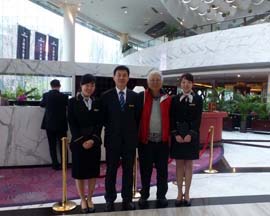
- In the lobby, I was greeted by these
courteous receptionists.
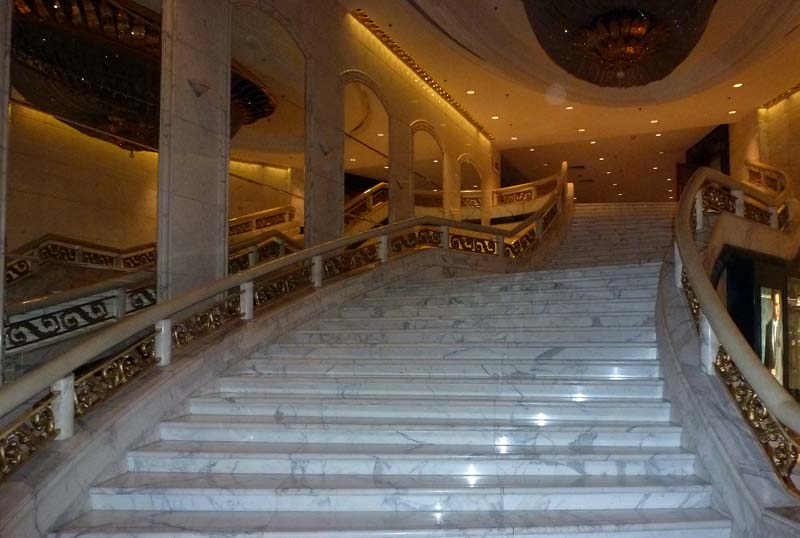
- Stairways leading to the second floor.
- One of the luxury stores on the
lobby floor.
- This young gentleman was
sent from France to learn how to run hotel dining rooms. I met
him in the breakfast room. He was going back to France after spending
eight months in this hotel. With this background, he expects a
rapid promotion in his profession.
copyright@2013 by Y. S. Kim. Some of old photos are from the public
domain or from the display room of the Dalian Seeing Tower.
Click here for his home page.
|
| |

|
I was fortunate enough to sped two night in this city during my trip to China in April of 2013.
-
In this photo, I am standing on
a seaside of Dalian, with the Yellow Sea in the background. On
the opposite side of this sea, there is a coastal village where
I used to swim during my childhood years.

|
| Japanese battle ship in Dalian. |
Japan's ultimate aim was of course to conquer the mainland of China, and the shortest way to reach the capital city of Beijing was through the sea port of Tienjin. Before reaching Tienjin, they had to go through the opening of the Tienjin Bay (also called Balhae Bay) Dalian is at the entrance to this bay.
- Japanese military headquarters in Lushun (near Dalian). This place is called Ryojin in Japan and Yeosoon in Korea. During Russo-Japanese War (1905), there was a bitter fight resulting in heavy casualties on both sides.
- Logistic base for the Japanese army.
- Japanese battle ship with heavy guns.

|
|
The headquarters of Southern Manchurian Railway Company. |
Since 1850, Westerners and Japanese came to China, and built many modern structures. They left, but Chinese are using those buildings and bridges very effectively for their own purposes.
- The Bank of Korea's Dalian Branch
was built in 1930. This building was neatly
refurbished and is being use for the ICBC (Industrial and
Commercial Bank of China). Before 1945, the Bank of
Korea was a Japanese bank. Chinese do not seem to hide
their past humiliation. This is a
brass plate telling the history of this
building.
-
How does this building look?
- Brass plate telling the history of this
- This latest photo tells this building is now for ICBC.
- Evening view of this building. On the left side is a building used by Japanese as their police station. This building is now used for the Citi Bank of China.
- The Bank of Korea in Seoul was also built by Japanese.
-
How does this building look?
- Trolley cars can be seen in
Dalian, and there are different models. I was very happy to
see this particular model because I used to ride on "electric
cars" like this before leaving in Korea in 1954. This Mitsubishi
model was introduced by Japanese to Seoul before 1940, and its
unique feature is that it has six doors. Here is
a full view of this trolley car.
This trolley car must be more than 73 years old, Chinese are still using it. This tells the extent to which Chinese converting foreign products to their own. Koreans got rid of those electric cars in 1965.
Don't worry. There are also newest models.
- Asia Development Company was a
Japanese institution to buy up the farmlands in Japanese colonies.
This building seems to be in good shape. This building is now
used for the Chinese Bank of Communication.
In Seoul, Korea, Japanese had a company with the same name with the same purpose. This is a photo of the company building in Seoul. When I left Korea in 1954, this building was used for the ministry of internal affairs (police and security). I assume it is gone now.
Koreans hated this "development" company and refused to sell their lands to Japanese. As a consequence, Japanese had to could buy only low-quality lands and develop them. It was OK for Koreans. I assume Chinese had the same attitude to this company.
- Yamato Hotel used to be the superstar
hotel before 1945. The Japanese prime minister stayed here when he came
to Dalian. The Emperor of Manchu-Koku also stayed here. It is now
a three-star hotel called "Dalian Hotel." This building looks like
this these days.
- Yamato Club room still carries the original Japanese name. Needless to say, they keep this Japanese name to attract tourists from Japan.
- From this club room, the view of Dalian's main square used to look like this. When I went there (April 2013), the view was like this. This main square is now called the Zhongsan Square. Zhongsan was one of the names of Sun Yatzen.
- The Bank of Korea and the Police Station look like this from the Yamato Club.
- Click here for the Wikipedia page for the Zhongsan Square.

|



- Old and new buildings. Those four-story seaport terminals were build by Japanese 100 years ago, and they were the tallest buildings in Dalian then. These days, new building are sky-high. There are many many high-rise buildings in China and they are all built after the year 2000.
- Another dock entertaining newly arrived ships.
- Ferry boat to and from Inchon, Korea.
- One of the cargo terminals. The people of the world use many things made in China. They come from China in this way.

|
- It has beautiful beaches.
I am standing at this beach with the Yellow Sea behind.
On the other side of this sea, there is a another beach
in Korea where I used to swim during my childhood.
- Excellent place to have memorable photos for newly-wed couples.
- Mao Zedong came to this beach in 1962, and composed a poem praising the beauty of the place.
- On the beach is a hill-side park with natural beauty, and also with artistic sculptures
- Dalians know how to eat.
These are food-delivery bicycles. They are convenient
for office worked in the city.
- MacDonald's is ready if you need fast food.
- One of the Japanese restaurants, in addition to numerous Chinese seafood restaurants.
- Here is another Japanese restaurant,
which looks rather expensive. There are many tourists
coming from Japan, especially those whose parents and grand
parents lived here before 1945.
Toshiro Mifune was born here in 1920. Who was he? He was the most distinguished Japanese actor in the 20th century. He acted as the seventh Samurai in Kurosawa's Seven Samurai. He acted also as Lord Toronaga in the TV mini series called "Shogun."
- Renmin Street (People's Street) is
Dalian's main street with many luxury stores.
- This is one of the stores on this street.
- Georgio Armani is also there.
- Louis Vuitton. How can you leave out this symbol of luxury.
- During the night, the street is like this.
- People waiting for the bus. They are neatly dressed.
-
Furama Hotel is one of the five-star hotels in Dalian. It is
very reasonably priced.
- In the lobby, I was greeted by these courteous receptionists.
- Stairways leading to the second floor.
- One of the luxury stores on the lobby floor.
- This young gentleman was sent from France to learn how to run hotel dining rooms. I met him in the breakfast room. He was going back to France after spending eight months in this hotel. With this background, he expects a rapid promotion in his profession.
|