Tigers with Wings
Y.S.Kim (1996.5.21)You have read an interesting article written by Mr. Joon Shik You in our previous communication. He will be the first-year graduate student in the biophysics program of the Univ. of Maryland. I like him and he has many interesting ideas in physics. In his article, he pointed out that the qualification of a Korean high school teacher is measured by the number of students he/she has sent to SNU.
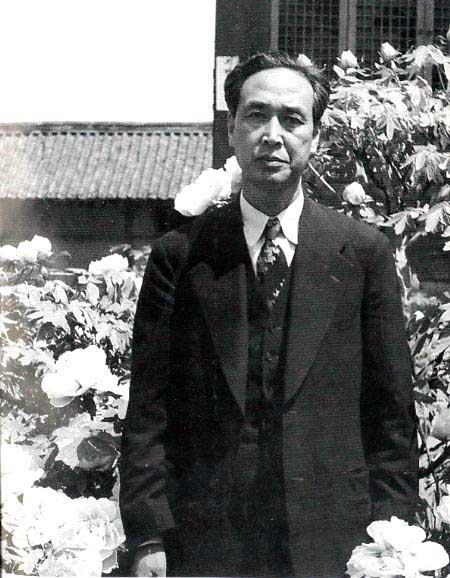
It is not fair to blame any single person for transforming Korea into an
Entrance-exam Hell. However, if I am forced to name one person most
responsible for this mess, I would mention the name "Kim Wonkyu." He
holds the top record in sending students he sent to SNU. I knew him very
well because he was my high-school principal. After he died in 1969, his
family set up a private institute named after him. The business was quite
profitable because the word "Kim Wonkyu" was synonymous to successful
entrance examination.
Let us invite another interesting person to this conversation. You all know who Kim Hogil was. He was the founding president of Pohang Univ. of Science and Tech. He spent ten years until 1978 at the Univ. of Maryland. Kim Hogil was not only a brilliant man, but also had a colorful style of talking. He often told me he knew about me better than I do, and he gave many different stories about me. I do not remember all of them, but I would like to present one interesting version to you, because it tells Kim Hogil had a deep interest in the Korean educational system many years before he became the first president of POSTECH.
He told me that he knew about me before coming to the Univ. of Maryland in 1968 (I came in 1962), and studied about me more carefully after having direct contacts with me. He then said he carefully compared me (Y.S.Kim) with Dr. Kim Myungsun (my uncle whom I mentioned in my articles) and with Principal Kim Wonkyu. I then asked him where I stand in comparison with those two gentlemen. He bluntly told me that I am nothing compared with them, and that, If I (Y.S.Kim) have anything, it is because of their influence. When I asked how much he knows about those two Kims, he said he knows much more than I do even though he never met them. As some of you know, this is the way Kim Higil used to talk. He did not always sound logical, but what he said sometimes carried a deep meaning. If he studied Kim Myungsun and Kim Wonkyu and their influence on one particular person that carefully, he was indeed interested in becoming a great educator.
Then what led Kim Hogil to go through such a thorough investigation of my connection with those two Kims? Kim Wonkyu was a very outspoken person and used to bragg about his ex-students. You can now guess whose name he mentioned most often. Kim Hogil heard about me from what Kim Wonkyu's public speaches. Even though, he was known as the "Exam Czar" among Koreans, he never praised me as an efficient exam taker. When I was in his high school, he used to praise me for my extra-curricular activities on electronics and short-wave communication.
After I came to the United States, he started praising me for "judiciously" managing my life as an "exemplary citizen" of the world. Because he was not so familiar with American or Western life style, he often made up his stories according to his educational philosophy. The point is that his ideal student is not an exam-taker, but a person who can play leading roles in the world. Kim Hogil was one of the small number of Koreans who knew this, and this is presumably why he knew Kim Wonkyu better than I do.
You are then tempted to ask Kim Wonkyu why he created this exam mess if his ultimate purpose is not the exam. Since he is not around, let me answer the question for him. Tigers are known to be ferocious animals. However, since tigers do not have wings, they can play only a limited role in the world. Koreans use the word "tiger with wings" for a superperformer. When you are fully prepared for the entrance exam, you are like a tiger. After the exam, you should build your own wings. You can start this during your freshman year. It is not too late, and you should not complain. How about the knowledge you accumulated while preparing for the exam? Keep it and use it later. I am writing many articles these days, and they are based on the knowledge I acquired during my high-school period.
There seems to one phenomenon which contradicts common sense. It is natural for people to praise the exam system when they pass, and curse the system if they fail. However, in Korea these days, the exam system is thoroughly cursed by those who pass the exam, while those who fail stay silent. According to the Washington Post article (May 7, 1996), the average cost for the exam preparation in Korea is $30,000, perhaps the highest in the world. Thus those who passed the exam should know how fortunate they are. Let us ask Kim Wonkyu again how we can deal with this problem. He will say
"If there is anyone who complains about the exam system after passing the exam, he/she should be shot to death."
Kim Wonkyu was a Spartan-style educator. We can agree that the death penalty is too severe, but we can start making progress if we stop complaining about the system. If you passed the exam, you are a tiger. Your next step is to build your wings. You would agree that Kim Wonkyu has a better solution to our problem than Harvard has.
PS. I was one of the 360 boys who entered his high school in 1948. Because of the devastating war (1950-30), only 250 of them were able to graduate in 1954. During the war, we had to study in roofless class rooms for one year and in temporary veneer shacks for two years. Yet, my class produced three Harvard PhDs, two Princeton PhDs, and one MIT PhD.
Eaton College (High School)
Y.S.Kim (2004.3.27)I came back from London after spending my spring vacation week there. Things are good there. Weather in London is never good, but spaghetti tastes much better there than anywhere in Italy or the United States. How does it taste in Korea? While there, I was thinking of writing the following article.
The name of my high-school principal was Kim Won-Kyu. He was a very happy man because he had a passion toward his work. Within his school system, he was a dictator. He also had a strong influence on Korea's educational system. He transformed an easy-going Korea into an entrance-exam hell. As many of you know, Dr. Kim Hogil was the founding president of Pohang University of Science and Technology, and he also occupies an important place in Korea's educational system. He spent ten years at the University of Maryland, and he used to have hot arguments with me very often.
It is safe to say that Kim Hogil had a great respect for Kim Won-Kyu. Kim Hogil used to tell me he knew about Kim Won-Kyu better than I do. I then asked him whether he ever met the person. He said No, but he knows better because I am nothing. He then added that, if I have anything, it all belongs to Kim Won-Kyu. As many of you know, Kim Hogil had his own unique logic, and used to annoy people. However, in this case, his logic was a product of his admiration toward Kim Won-Kyu and, to some extent, toward me. I used to like him and I still miss him.
When I was a high-school student, Kim Won-Kyu had one favorite word, namely "Eaton High School" of England. He used to mention this word everyday. Eaton College is a five-year pre-college school for the boys of ages from 13 to 18. I do not know why it is called collage. This high school produced many important Britisch during the reign of Queen Victoria (1837-1901) while the British Empire was expanding. Most the prime ministers, governors of India, navy admirals were Eaton graduates Kim Won-Kyu's dream was to construct a high school like Eaton in Korea.
When I went to his home, in August of 1954, to say "good bye" to
him before leaving for the United States, Mr. Kim Won-Kyu told me I
should handle Eaton men when I meet them in the world. I have been
in the United States for fifty years, and travelled around the world,
but I have not met a single Eaton man whom I wanted to handle. After
all those years, I went last week to Eaton near Windsor (about 60 km
from London) to meet some Eaton boys to figure out why I could not
see them in the world.
Eaton was an important institution when Britain needed the people who could run the Empire, but it is no longer. To ordinary people in England, Eaton is a special high school for the riches and royal family members where students wear black uniforms. I met many students there in their uniforms. Other than that, Englishmen/women do not know what Eaton stands for. Neither Tony Blair nor Margaret Thatcher is an Eaton graduate.
To make things worse, Eaton had not established a tradition of their graduates going into science. This is the reason why I was not able to find Eaton men in my profession. Most of the Eaton students follow their family traditions. I met a 13-year old boy on the Eaton campus. I asked him what he wants to be. He said he wants to be a soldier. Presumably his grandfather is a general who looks glamorous to him. At his age, it is not possible to have a critical mind.
I also met a student in his graduating class. I asked him what his future plan is. He said he wants to go the United States to study economics. These day, one has to be in the U.S. to run the world, he said. He seems to carry the original Eaton spirit: to run the Empire. This seems to be the trend for the ambitious Eaton graduates these day.
In England, Eaton boys are not the only ones wishing to study in the United States. In London, manual services such as hotel and restaurant works are mostly are provided by the students from money- poor Eastern European countries. There are also many students from Mongolia. The British system allows foreign students to work for 20 hours/week while studying in universities. I asked them what their future plans are. They all say that their ultimate destination is the United States. It is very difficult for them to go to the U.S.
This time of the year, many Korean students receive admission letters from the graduate schools in the United States. For Koreans, it is very easy to come to the U.S. They should know how fortunate they are, compared with those from other parts of the world including those from Eaton College. Instead, they refuse to learn English while in the United State, thus failing to acquire ability to communicate with the world. I talked about this last time.
They should also realize that they had an exceptional educational background. Before receiving their admissions, they had to go through ruthless competitions in Korea's educational system. Here again, Korean students do not see how fortunate they are. They instead constantly curse their educational background. If they survived in the Korean educational system, they should use their ability to compete with their colleagues from other parts of the world.
Here again, I do not preach what I cannot practice. You would agree that I went to Eaton out of my respect to the Korean educational system largely framed by my high school principal. Many people say that I have reached my retirement age, but they also agree that I am the most competitive or combative physicist after visiting my home page (http://ysfine.com/home/research.html). After all, Kim Hogil was right. I am nothing. If I have anything, it all belongs to Kim Won-Kyu.
Here is the point of today's sermon. If you survived in the Korean educational system, use your competative ability to compete with those from other countries. You will be far more productive than in competing against your fellow Koreans.
Follow-up on Eaton
Y.S.Kim (2003.3.29)Eaton College was known as the best high school in the world until the end of World War II. These days, it is very close to the worst high school, if not the worst in the world. How did that happen? The answer is very simple. The school was not able to adjust itself to the world environment, as in the case of the Korean government and Korea's best universities.
There was another Eaton-like school in England. It was and still is called Harrow. Quite understandably Eaton and Harrow used to be two competing schools. From outsiders' point of view, they were the same school. Winston Churchill was one of the last prominent graduates of Harrow.
He was able to see the concept of the British Empire was becoming outdated due to the enlightenment of the world. More specifically people of the world, other than English-speaking people, were learning how to operate guns. He came to the conclusion that the only way for Britain to survive as an English-speaking nation was to sell the Empire to the United States. This is what the Atlantic Charter (1943) is all about. The United States then combined the Empire with Woodrow Wilson's idea of the League of Nations to create the United Nations.
As you know, the first government of Korea headed by Rhee Seungman was created by the United Nations which was an agency of the United States at that time. Rhee did not have any political organization within his own country, but he knew what was going on in the world. As a student of Woodrow Wilson at Princeton, he was able to see how the concept of the United Nations was evolving. This made him powerful enough to eliminate his political rivals such as Park Hun-Young and Kim Koo.
Russian Ladies Praise Korean Education
Y.S.Kim (1998.7.5)I came back last night from my trip to Armenia. Armenia is a small country surrounded by Turkey, Azerbaijan, Georgia, and Iran. There are many Armenians in the United States, and they are known as very stubborn people. In 301 AD, Armenia adopted Christianity as the national religion 32 years before the Roman Empire did. However, it is very interesting to note that Armenians still preserve their pagan traditions.
Like most of the former Soviet republics, Armenia is depressed from the economic point of view. But they know how to make themselves happy. On my hotel floor, there were many French girls from Paris, and I was able to compare them with their Armenian counterparts. Indeed, to my eyes, the Armenian girls were quite capable of pushing those French girls to back seats.
Quite contrary to the impression we have about the former Soviet republics, Armenian maintains a very close tie with Russia because they need each other. For instance, Armenia's Turkish border is guarded by Russian combat troops. The physics conference which I attended was jointly organized by Yerevan State University and JINR (Russia's Joint Institute for Nuclear Research at Dubna). For all practical purposes, the JINR was running the show, and its director and his secretarial staff came all the way from Dubna (north of Moscow).
I was told by the organizers that I would receive an honorarium (extra money) of 50 USDollars, but I was not happy in view of the financial problems Russians are having these days. Yet, it would be very rude to decline their offer. After some agony, I pulled out a piece of Korean wisdom: to eat up and drink up. Then, two intelligent-looking Russian ladies came to me and hand-delivered to me five fresh $10 bills. I then proposed to them that I and they go to one of Yerevan's best French restaurants and spend all $50 (about $300 if spent in the U.S.). They laughed and readily agreed with me. So we went, and spent happy hours there. It would not be appropriate to mention here their names and their positions, but both of them spent more than 20 years at JINR as administrators and they know very well the physics world.
After we left the restaurant, we spent one hour on the streets. At
one point, we met an ice-cream vendor who speaks fluent English. I
asked him how old he is, and he said sixteen. I then showed him my two
hands and told him I went to the United States when I was 19 years old
with two empty hands but I am now famous enough to be invited by his
country. I told him further that he should also go to the U.S. to study.
Then there was a surprise. One of the Russian ladies said to him "Prof.
Kim had an excellent preparation before going to the U.S. You should
therefore study very very hard as Prof. Kim did." How did she know that
I had an excellent preparation?
I frequently say that I had the world's best education before coming the United States to young Koreans in order to encourage them. However, I never say this to non-Koreans for diplomatic reasons. Then how did these Russian ladies sense my thinking? It is also remarkable that I heard similar comments from a number of Russian women during my earlier visits to Russia. Then, is there a secret communication channel between Korean boys and Russian girls? I wrote an article in 1995 on this subject, and you are invited to read my article entitled "Can Koreans talk to Koreans?" (1995.11.14), which contains the following two paragraphs.
One hundred years ago, Korean boys (girls) were not allowed to talk to girls (boys). These days they talk too much. Then when and how did they pick up the romance culture? It was during the period 1920-40. During this 20-year period, Koreans learned how to write Hangul and learned how to write love letters. The romance culture during this period was well documented by the Korean novels written Lee Kwang Soo. These days, he is known as a pro-Japanese traitor to our young people, but I am not interested in discussing this issue here.
I was told by my friends in literary circles that Lee Kwang Soo was heavily influenced by Tolstoy. This means that Koreans and Russians had the same romance style at least for 20 years. However, this 20-year-period could be a slice of several hundred years. Thus, my recommendation is that you should talk like Captain Bronsky when you talk to a Russian girl. She may then talk to you like Anna Karerina.
John von Neumann and His High School in Budapest
Click here for some photos of
this unique high school.
Y.S.Kim (1997.6.21)
John von Neumann is called Johann von Neumann in Germany, but his original name was Neumann Janos. He was in born in Hungary and received his pre-college education at a small high school called Budapesti Evangelikus Gimnazium (Budapest Lutheran High School).
On June 16, I received a package from this high school containing graduation photographs of the Class of 1920 and of the Class of 1921, together with school records of two famous persons. The 1920 photo contains Wigner Jeno (knwon to us as Eugner Wigner) and the 1921 photo contains Neumann Janos. From their records, I can find out what grade Wigner got in chemistry in his sophomore year, and also what Neumann got in his mathematics in his senior year.
Why did the high school send me those documents? Am I so great? No! They were simply responding to the kindness I have shown to them when I visited the school on June 1, 1997. When I went there I gave them 100 color copies of the photograph of Wigner and his wife taken in July of 1991. If you like to have a copy of this photograph, I will be very happy to send to you. Please send me your mailing address because I cannot send it by email.
Since I talked enough about Wigner, I would like to say tonight a few words about von Neumann. Von Neumann was born in 1903 and died in 1957 at Princeton. He had been a member of Princeton's Institute of Advanced Studies. He went to Princeton with Wigner in 1930. There he developed two new branches of mathematics. The first is called Game Theory which allows economists to formulate quantitative approach to the relation between individual instincts and the overall economic variables.
His most important contribution was to formulate the mathematical logic which electronics can perform. This is the reason why von Neumann is often called the father of computers. He was interested in building the machine which will perform the logic. He thus invited a number of electronic engineers to the Institute of Advanced Study and started making gadgets consisting of many vacuum tubes and transformers. However, the Institute directors decided that the vacuum tubes are too secular and thus not consistent with the objectives of Einstein's Institute.
As a consequence, those engineers went to IBM and other companies and started the computer industry. Indeed, this is the biggest mistake Princeton made. I think, in my earlier articles, I discussed a small mistake made by one of the Princeton personalities, and I hope to discuss more in the future.
Let us go back to von Neumann. He is not a stranger to physicists. In 1932, he wrote a book entitled "Die mathematische Grundlagen der Quanten-mechanik (Springer-Verlag), which was translated into English in 1955. The English title of this book is Mathematical Foundation of Quantum Mechanics (Princeton University Press). As some of you know, this book is the Old Testament of quantum measurement theory. von Neumann did not stop here. He developed the mathematics called von Neumann algebra. This is a language of quantum mechanics taking into account uncertainty caused by entropy due to limitations of measurements. Indeed, this is a very lively branch of physics these days.
In 1995, another person from Wigner's Budapest high school got a Nobel prize. His name is Jozseph Harsyanyi. He got the prize in Economics. If one high school produced two Nobels (Wigner and Harsyanyi) plus von Neumann, it makes us to wonder. Should we talk more about this high school?